Wednesday, March 19, 2008

Catalina Island's Ghosts of the Past

Excerpts reprinted from article by Julie Miller in the Australia's Sydney Morning Herald:

The woman from the gift shop at Catalina Island's Casino is convinced the building is haunted. She animatedly tells me how, just two days earlier, a clock fell from the wall of the shop for no reason. She then launches into other tales of the unexpected from the building's history: of the hapless worker trapped in cement during construction of the Art Deco masterpiece; of a pipe organ playing on its own; and of a period-clad apparition disappearing through the wall near the popcorn machine. All proof, Lynette believes, that this landmark is an epicentre of paranormal activity on an island crawling with phantoms.

Just an hour's ferry ride from Long Beach, Los Angeles, Santa Catalina Island is a Mediterranean-style retreat that provides a welcome escape from the madness of Tinseltown. Once the playground of the rich and famous, it now attracts tourists in search of a fun daytrip or tranquil weekend away, a place with a quite different view of the Californian lifestyle.

Gorgeous as it is, however, there is admittedly something a little eerie about this island. Catalina - and in particular its main port of Avalon - feels trapped in time, a vestige of a once-glorious past. And as the chilling Pacific fog rolls in, as it does on a regular basis, shrouding the dramatic coastline in white, it's easy to understand why so many believe the island is the haunt of entities other than just tourists.

Catalina had been occupied for thousands of years by Native Americans but its modern history began 150 years ago when tourists began discovering "the Capri of the West". In the 1920s, the island was purchased by the chewing gum magnate William Wrigley Jr., who built roads, constructed hotels and shops and erected the $2 million dance pavilion known as the Casino (a misnomer, as gambling was banned in the building). Wrigley also brought his baseball team, the Chicago Cubs, over for spring training, placing the island in the social spotlight for the first time.

During its heyday, Catalina was where Hollywood came to play. Western novelist Zane Grey had a home here; Charlie Chaplin and his wife Paulette Goddard were frequent visitors; while movie director Cecil B. De Mille said Catalina was "the only place where I can get away to work amid real inspiration". The Casino Ballroom, which held 3000 patrons, drew big name bands led by Glen Miller, Bennie Goodman, Ray Noble and Jan Garber and it became the hub of Hollywood nightlife.

Beyond Avalon is another world - hectares of rolling wilderness, inhabited by wild boar, foxes, bald eagles and bison, introduced in the '20s during production of a western movie. There are several tours available to explore inland or you can rent bicycles if you want to do it the hard way.

Those with an interest in Hollywood history may also be drawn across the island to another place of notoriety - the secluded bay near Two Harbours where the actress Natalie Wood drowned in 1981.

Some people say her ghost still wanders the nearby beach, a lonely figure spotted during the winter months. Perhaps she is searching for clues to the mystery of her early demise or perhaps her spirit is simply content to linger in a place of rare beauty and tranquillity, an eternal haven from the hustle and bustle of the mainland.

TRIP NOTES

Getting there: Catalina Express departs from the Long Beach Downtown Landing several times a day. A round trip costs $US59 ($63) or $US79 for a Commodore's Lounge upgrade, which includes pre-boarding, a comfortable lounge area and a drink.

Attractions: The Avalon Scenic Tour on the open-air trolley costs $US16.

Monday, March 17, 2008

Inland Empire Paranormal Investigators tackle Colton's Agua Mansa Pioneer Cemetery

Excerpts from Inland ghost hunters find the paranormal -- or the simply normal
by Gregor McGavin of The Press-Enterprise:

The grave was marked only by a splintered wooden cross jutting from the weedy grass of Colton's Agua Mansa Pioneer Cemetery.

No name, no headstone. Just two lengths of weathered wood bound by a bolt.

"No one knows your name," K.D. Foreman said from the graveside on a recent morning. "Is there anything you'd like to say?"

There was no reply from that resting place, nor from a dozen others throughout the cemetery. But that's sometimes the case for Foreman and the other members of the Inland Empire Paranormal Investigators.

Much of their work comes later, when the amateur ghost hunters painstakingly analyze the audio, visual and electromagnetic recordings they gather on their outings.

The Inland group is one of dozens throughout Southern California and hundreds -- if not more -- nationwide, enthusiasts estimate. The 70 or so members met online beginning a year ago and have visited private homes, historic landmarks and graveyards throughout Riverside and San Bernardino counties. They arrive armed with digital cameras and television remote-size devices they say capture electromagnetic fields and sounds undetectable by the naked ear. Investigations take place weekly, said Foreman, the 43-year-old substitute teacher who organized the group and serves as its leader.

"It's a hobby and a calling," said Foreman, who says she started having visions of future events at age 10. Similarly prophetic dreams started two years later, Foreman claims, when she foresaw her brother in a car accident on his way to a concert.

Foreman says that the spirit of an old man she believes is the former occupant haunts her Yucaipa home. He turns the television on full blast in the night and makes her golden retriever growl.

Peaches Veatch, 34, a mortgage loan consultant from Riverside, says her introduction to the supernatural came at age 10. Her godfather, who had died several years earlier, appeared in her bedroom late one night. She says he was sitting in a chair in the corner -- a chair that did not exist. His image disappeared seconds later.

"Why he appeared to me, I don't know," Veatch said.

The Inland group gathered on a recent weekend for a midday visit to Agua Mansa. The site sits on a few acres of sloping hillside a stone's throw from the Santa Ana River, in an industrial stretch of Colton.

The cemetery, established in the 1850s, has been home to many supposed ghost sightings. Motorists on the winding, two-lane road out front have claimed to see an old man walking his dog. In some accounts, both disappear moments later; in others, they seem to walk straight through the gates.

Inside, pepper trees shaded crumbling headstones and broken crosses. Some graves were half-hidden by weeds and grass; others were not marked at all.

"Peaches, come over here and tell me if you sense anything," Foreman called out at one point.

"I sense they just cut the grass," Veatch said.

At another grave, Veatch said her head began to buzz, as though she was standing beneath power lines.

"We sense a spirit here -- could you light up this meter?" Foreman asked.

"Nothing," Foreman declared a minute later.

The investigation was over after an hour.

A few days later, the group sent some audio recordings to an observer of the investigation. Some were indecipherable; others sounded like the wind. On one of the more promising files, a brief whisper could be heard after an investigator asked for a response from one of the graves.

It turned out to be the observer muttering under his breath after accidentally rustling his notebook.

Sunday, March 16, 2008

Haunted Histories: Insight into Bodie and Skidoo

Excerpts from the LA Times article by Hugo Martin. For full story click here.

Spirits of the West hang around ghost towns

The ghost towns of the American West recall a desperate era. Located on high plains and open deserts where sandstorms and cold winter nights embalm any semblance of life, these towns still whisper their legends to anyone willing to stop and listen.

You'll hear the stories of the men, the women and the children who abandoned their homes, gave up their mining claims and vanished.

Today, these ghost towns offer little more than dusty whiskey bottles on warped shelves, dog-eared hymnals in church pews and framed black-and-white photos, veiled in spiderwebs.

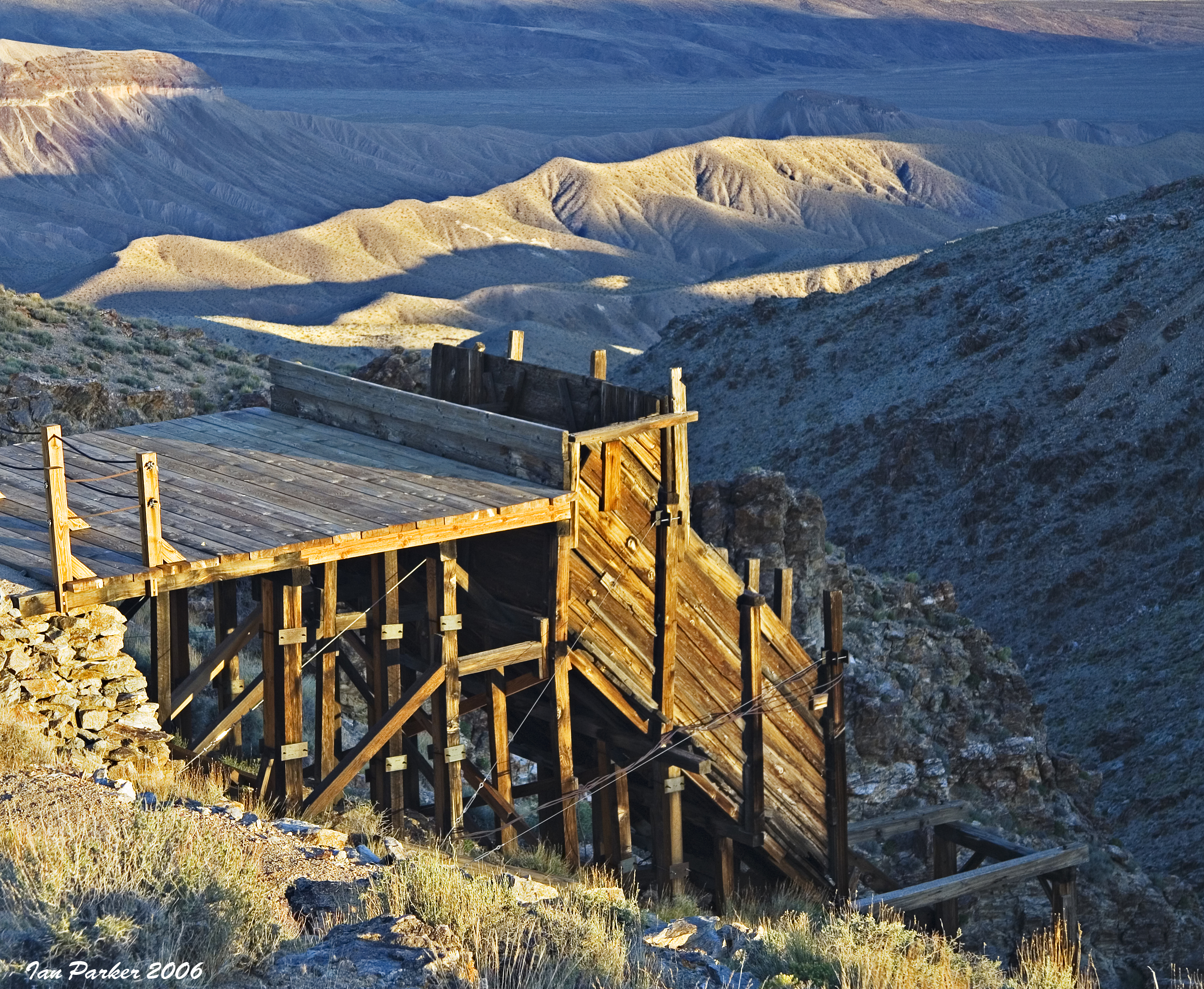
Skidoo, Calif.:
Pity the hard-luck residents of Skidoo, perhaps the sorriest little mining settlement in the West.

In its short-lived, miserable history, the town had the misfortune of attracting such desperate characters as Joe "Hooch" Simpson. In 1908, this down-on-his-luck barkeep made the mistake of gunning down the town banker for $20, and when a lynch mob finally got its hands on him, they couldn't wait to build a proper gallows. They hanged him from the telegraph pole that brought news of the outside world to this benighted patch of earth.

When a reporter from the Los Angeles Times showed up to take a photograph, the good citizens of Skidoo accommodated him by digging up Hooch, brushing him off and hanging him again. But then the town doctor, in a macabre moment, lopped off Hooch's head to test for syphilis, the possible cause of his sudden madness.

No wonder the twice-hanged, headless Hooch still wanders these empty hills in Death Valley where all that remains are a historical marker, broken bottles and hundreds of abandoned mine shafts.

Directions: From Stovepipe Wells, drive southwest along California Highway 190 for nine miles, turn left on Wildrose Canyon Road and, after nine more miles, turn left on the first major gravel road and continue for almost eight miles. For more information, call the Death Valley National Park at (760) 786-3200.

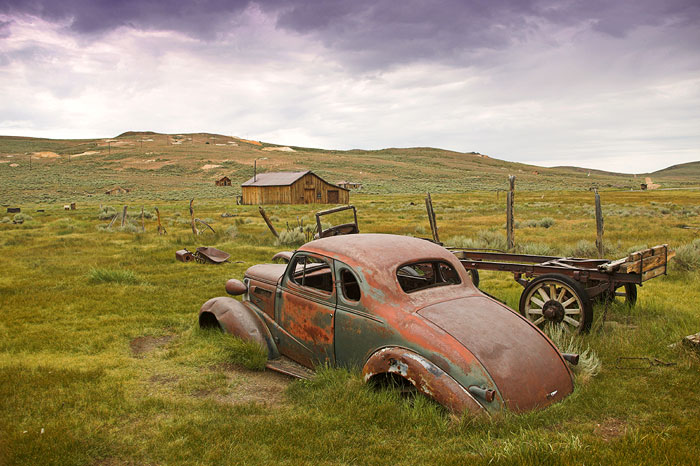
Bodie, Calif.: Bodie is a cursed ghost town. Pilfer anything from one of the old sun-bleached buildings north of Mono Lake -- a nail, part of a clock or even an old bottle -- and bad luck latches onto you forever.

Don't believe it? Then tell it to the visitors of this ghost town who have been returning stolen stuff with tales of heartbreak, death and serious injury that beset them once they left this Eastern Sierra settlement.

One fearful visitor even returned the nail that pierced her tire as she drove through town.

Directions: From U.S. Highway 395, take California Highway 270 east. Drive 10 miles to the end of the pavement and continue three miles on a dirt road. For more information, call Bodie State Historic Park, ( 760) 647-6445.